
Desk Feng Shui that feels doable.
If your workspace feels “busy” even when it’s cleaned, you may need more than decluttering. Use Feng Shui as a practical layout tool: build stability behind you, keep sightlines clear, and create a 2-minute reset that makes focus easier to start.
Workspace audit
Command position and sightlines
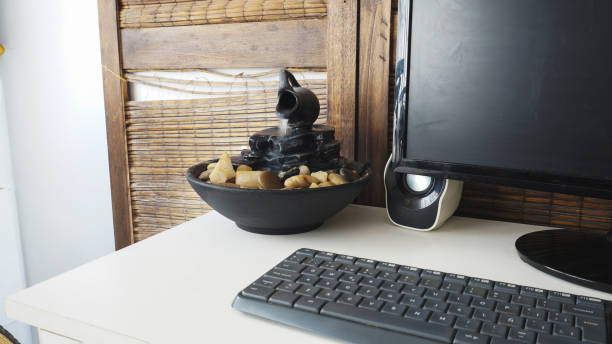
Command position (in real life)
Command position is about feeling “oriented” while working. Ideally, you can see the doorway or your main path without twisting your torso. If you can’t move the desk, adjust monitor angle, use a mirror for visibility, or add a small secondary light so the space feels less hidden.
- Place your monitor so your shoulders don’t rotate to view the room.
- Keep the direct space in front of you visually calm.
- Use one “focus zone” where your eyes naturally land.
Why this matters
When sightlines are clear, attention stays in the task. When visibility is chaotic, your mind spends energy re-checking the environment. Feng Shui helps you reduce that hidden workload with simple arrangement.
Flow + balance
Stability behind you and balanced sides
Your desk should feel like a stable platform, not a place you constantly “manage.”
Support your back
A stable surface behind you helps the space feel grounded. If you work with your back toward an open room, try using a tall shelf, a backrest, or even a simple room divider. The point is psychological stability and practical comfort.
Balance what feels “heavy”
If one side holds piles of paper or extra gear, your workspace can feel uneven. Balance doesn’t mean symmetry. It means “equal calm.” Store items in a way that reduces visual weight.
Try this 3-part setup
- Left-right check: place frequently used tools on your dominant side, then keep the other side minimal.
- Cable calm: route cables behind the desk or into a tray so they don’t create visual distraction.
- Warm softness: add a warm desk lamp shade or a fabric item to reduce harshness from overhead lighting.
Small improvements count. Feng Shui is about repeated daily ease, not one dramatic transformation.
Daily ritual
2-minute desk reset (the “start signal”)
This is the part most people skip. The reset is what makes the environment work for you.
What to do
- Align your monitor and keyboard edge so everything looks straight.
- Move all “not today” items into one closed spot (drawer or small basket).
- Place your next-task paper or note where your eyes naturally land.
- Quick wipe: remove dust from your screen area (even a light pass).
You’re not cleaning for hours. You’re creating consistency: same visual cues, same physical comfort, same mental start.
How to know it’s working
- You start tasks faster (less “warming up” time).
- You notice fewer random interruptions.
- Your desk feels less cluttered even before you fully tidy.
- You feel more “ready” when it’s time to work.
If you don’t feel the shift within a week, adjust one element. Lighting, monitor height, and storage placement usually matter most.
FAQs
Feng Shui questions (answered simply)
Practical guidance that stays grounded in daily work.
Where should I put my desk if I can’t see the door?
If you can’t see the door, optimize what you can: clear your line of sight to the screen, keep the behind-you area stable, and use a mirror or a secondary view so you’re not working in a blind corner. Consistency matters more than the perfect layout.
Does Feng Shui require removing everything?
No. Keep essentials visible and “not today” items stored. The goal is to reduce visual friction, not to eliminate all personal items. A Scandinavian approach can still feel warm and human.
How does this relate to ergonomics?
They’re different lenses. Ergonomics supports your body with posture and setup. Feng Shui supports your attention with arrangement, flow, and starting rituals. Together, they make work feel easier to begin and easier to sustain.
This website provides general lifestyle information only and does not constitute professional guidance.